White-Label GEO Reports: The Agency Structure
Build a white-label GEO report that survives the client asking how you know. Here is the section order, the two numbers that matter, and what to leave out.
TL;DR: A white-label GEO report is not a prettier dashboard with your logo dropped on top. It is seven sections in a fixed order, two boolean numbers, and an evidence appendix the client can check without you in the room. Put the sampling frame on page one and the raw answers in the back, and the report survives every question a client can ask.
Every agency that starts selling AI visibility hits the same wall in month two. The first report lands well - the client has never seen what Perplexity says about them, and the novelty carries the meeting. The second report has to answer a harder question: "how do you know?"
That is where most white-label reporting falls apart. If the deliverable is a number that moved from 34 to 41, you have nothing to say when the CMO asks what changed. If it is a structure where every number opens back to a stored answer, you have a retainer. Below is the section order we use, the question each section pre-answers, and what we deliberately leave out.
The one question a white-label GEO report has to survive
There are only two states for a client report: believed, or filed. What separates them is not design polish. It is whether the client can independently verify one line of it.
So build the document backwards from a single test. Pick any claim on any page. Can the client, on their own, in under thirty seconds, reach the raw material that claim came from? If yes, everything else inherits that credibility. If no, the logo on the cover is decoration on something they will quietly stop reading. That test is why the structure below front-loads method and back-loads evidence, with interpretation squeezed into the middle where it belongs.
The white-label GEO report structure you can copy
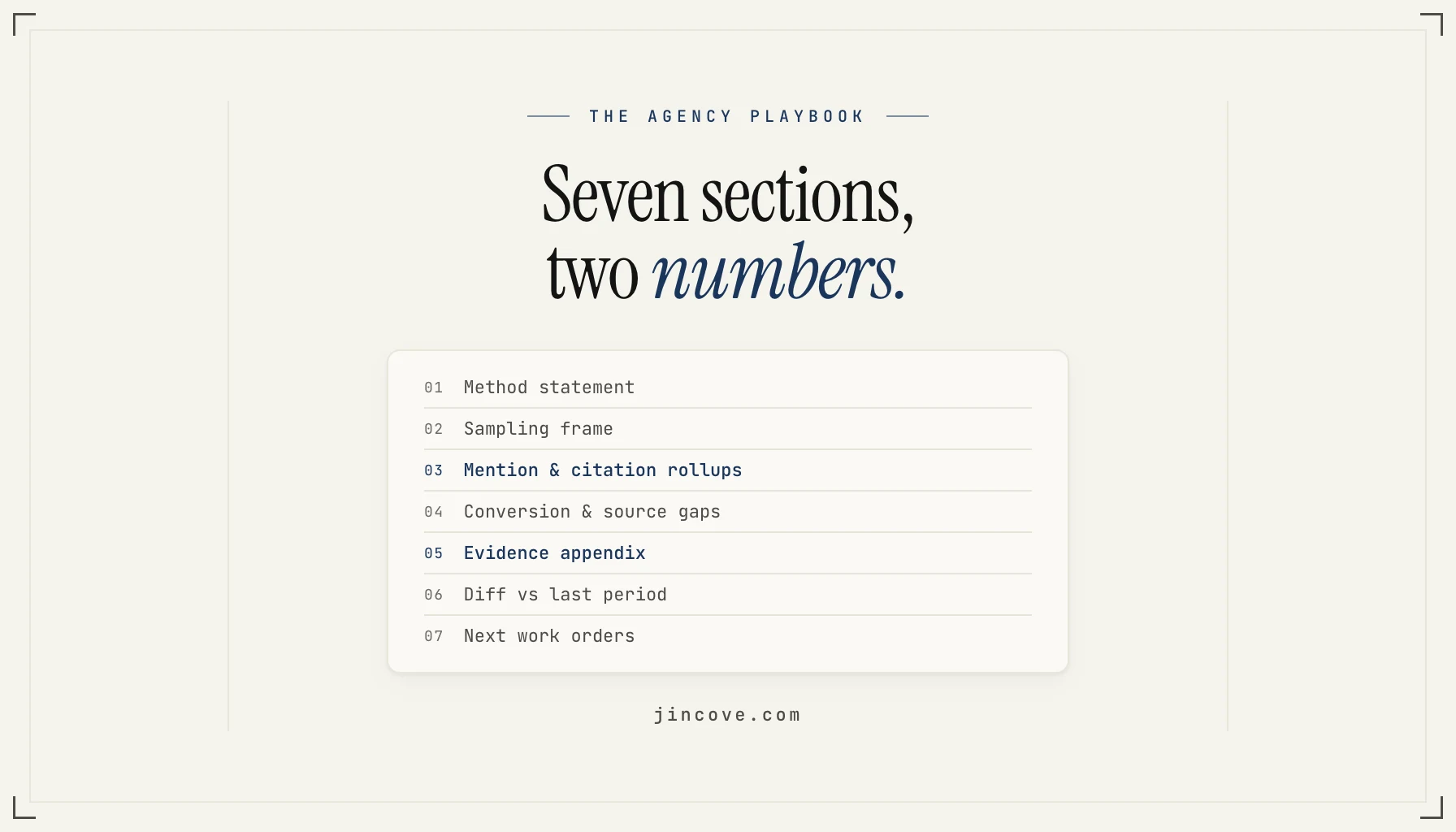
Seven sections, in this order. Each one exists to head off a specific question before it gets asked out loud.
1. Cover and method statement. Your brand, the client name, the period, and then three or four sentences of plain method: which engines were queried, that the answers were recorded rather than generated, and that no number in the report is modeled or extrapolated. The question this pre-answers is "did a robot write this?" A method statement written in ordinary sentences is the cheapest trust you will ever buy.
2. This period's sampling frame. One line, stated as an equation the client can multiply themselves: prompts times engines times run dates. For example, 20 prompts across 6 engines, run weekly on the 2nd, 9th, 16th, and 23rd, equals 480 sampled answers. The question this pre-answers is "is this the whole internet or a sample?" It is a sample. Saying so in the first two pages is what makes the rest of the numbers defensible instead of overclaimed.
3. The two boolean rollups. Per engine and in total: how many sampled answers named the brand, and how many cited the brand's own domain. Two counts, two percentages, nothing blended. The question this pre-answers is "what am I looking at?" Keep mention and citation apart, because they are different facts about different failures. If you need the argument for why they never merge, it is in mention vs citation.
4. Conversion gap and source gap. The two derived patterns, each with a count and two or three named examples. Conversion gap is cited but not named: the engine used the client's page and never said the brand. Source gap is named but the citation points at somebody else's domain. The question this pre-answers is "so what do I do about it?" These two are the only place in the report where you are allowed to be interpretive, and both stay grounded because each one names the prompt it came from. The full method is in the source gap vs conversion gap framework.
5. The evidence appendix, line by line. One row per sampled answer that mattered: prompt, engine, run date, verbatim answer text, and every cited URL. It is the longest part of the document and the part clients actually forward internally. It pre-answers the big question, "how do you know?", because the answer is on page 14 and they can read it themselves.
6. Diff against last period, next to what you actually changed. Two columns: on the left the movement, on the right the work your agency shipped in that window - the page you rewrote, the comparison table you added, the listing you corrected. The question this pre-answers is "did your work do anything?" Putting movement and action side by side, without drawing a causal arrow between them, is more honest and more persuasive than a claimed attribution.
7. Next work orders. Three to five concrete items, each tied to a gap from section 4, each with an owner. Not "improve topical authority," but "the comparison prompt on Perplexity cites a 2023 roundup that lists us at the wrong pricing tier; file a correction with the publisher." This pre-answers "what am I paying for next month?"
Section by section: what the client asks and what you must show
Every row here is a real meeting moment. The right column is the thing you have to be able to produce on the spot, or the section is decoration.
| Report section | What the client says | Evidence you must produce |
|---|---|---|
| Cover and method | "Where does this data come from?" | Named engines, a statement that answers were recorded not generated, and the run window |
| Sampling frame | "Is this everything people ask?" | The prompt list itself, plus the multiplication: prompts x engines x run dates |
| Two booleans | "Is 40 percent good?" | The same 40 percent from the client's own prior periods, not an industry average |
| Conversion gap | "They used our page and did not name us?" | The answer text with the cited URL, showing the client domain in sources and no brand in the body |
| Source gap | "Who are they citing instead of us?" | The competitor or aggregator URL, and the sentence in the answer that names your client |
| Evidence appendix | "How do you know?" | Verbatim answer, engine, timestamp, and a clickable list of cited sources |
| Diff and work log | "Did the retainer do anything?" | Last period's number, this period's number, and the dated list of what you shipped between them |
| Next work orders | "What happens next?" | Each item traced back to a specific gap row, with an owner and a date |
What to leave out of a white-label GEO report
The tempting additions are the ones that cost you the second meeting.
A single visibility score. One composite number is the most requested and most damaging element in this category. It cannot be explained, cannot be reproduced by the client, and the first time it drops for a reason you cannot name, the report stops being evidence and starts being a claim. If a client insists on one headline figure, give them the mention percentage with its sampling frame attached, and say plainly that it is a count, not an index.
Percentages without a sampling frame. "Visibility improved 18 percent" is meaningless without the denominator and the run dates next to it. Every percentage in the document should have the prompts, engines, and dates within reading distance, ideally on the same page.
Category exposure scored as a brand win. If the prompt is "best project management tools for agencies" and the engine names eleven products including your client, that is a list, not a brand result. Report category prompts and branded prompts in separate blocks. Blending them inflates the topline until someone reads the underlying answers.
Undated screenshots. A screenshot with no run date, engine label, or prompt attached is unfalsifiable, and clients have started to notice. Every image in the appendix carries the prompt, the engine, and the timestamp, or it does not go in.
Anything you cannot re-run. A figure from a one-off manual check you cannot repeat next month does not belong in a recurring deliverable. It will be missing next time, and someone will ask why.
How to deliver white-label GEO reports today, by hand
Here is the honest part. Jincove's built-in white-label delivery - your domain, your logo, your report template - is coming soon, not shipping today. It sits on the Agency plan roadmap and is not something you can switch on right now. What works today is a three-step manual flow most agencies are already running:
- Export the raw records. Pull the sampled answers, cited URLs, engines, and timestamps out as working files. You want the underlying rows, not a rendered PDF - a PDF you cannot restyle is somebody else's deliverable.
- Lay it out in your own template. Your slide master, your Google Doc, your Notion page. The seven sections above map onto whatever you already use for client reporting, and most agencies get it to a repeatable 45 minutes per client per month once the template exists.
- Keep every link checkable. The appendix is only worth including if the URLs work and the answer text is verbatim. Do not paraphrase engine output to make it read better. The clumsiness is the proof.
This is slower than a one-click white-label export, and we would rather say so than imply a feature that is not live. For the broader service design around this - pricing the data line, cadence, per-client isolation - see GEO for agencies and the agency plans. If you are still choosing a data source underneath your template, the honest tool shortlist covers who does what.
What a white-label report does not promise
This is the boundary worth writing into the report itself, in the method statement, in one sentence.
A white-label GEO report proves two things: what the engines said during a stated sampling window, and what changed after you shipped work. It does not prove that your agency can make an AI say good things about the client. Nobody can promise that, and the moment a report implies it, you have signed up to a result you do not control.
The distinction is commercial, not just ethical. If you sell "we will raise your AI visibility," every flat month is a failure and every drop is a refund conversation. If you sell "we will show you what the engines say, prove what moved, and work the gaps," a flat month is still a delivered service with an evidence trail. That is a retainer that survives a bad quarter.
The same logic applies to the audit that opens the engagement: run it as a documented sample, not a verdict. The sequence is in the GEO audit checklist, and the terms used above are defined in the glossary. If the client already gets a monthly SEO report and you would rather extend it than ship a second document, the retrofit version is in SEO client reporting when AI answers eat clicks.
Start with one report you can defend
Build the structure once, for one client, and the white-label GEO report becomes a template your account managers fill in rather than a document you dread: seven sections, two booleans, a sampling frame on page one, an evidence appendix in the back, no composite score anywhere.
If you want raw material to build that first template against, Request a free, human-run audit. Send one client URL and an email, and we hand-run ChatGPT, Perplexity, and Gemini and send back the answers and sources - enough to populate a real appendix and test the structure in your house style. When you are ready to run it across a roster, the agency pricing is usage-based, so the cost per client report is something you can calculate before you quote.
Related blogs
Related Post
Expand your knowledge with these hand-picked posts.
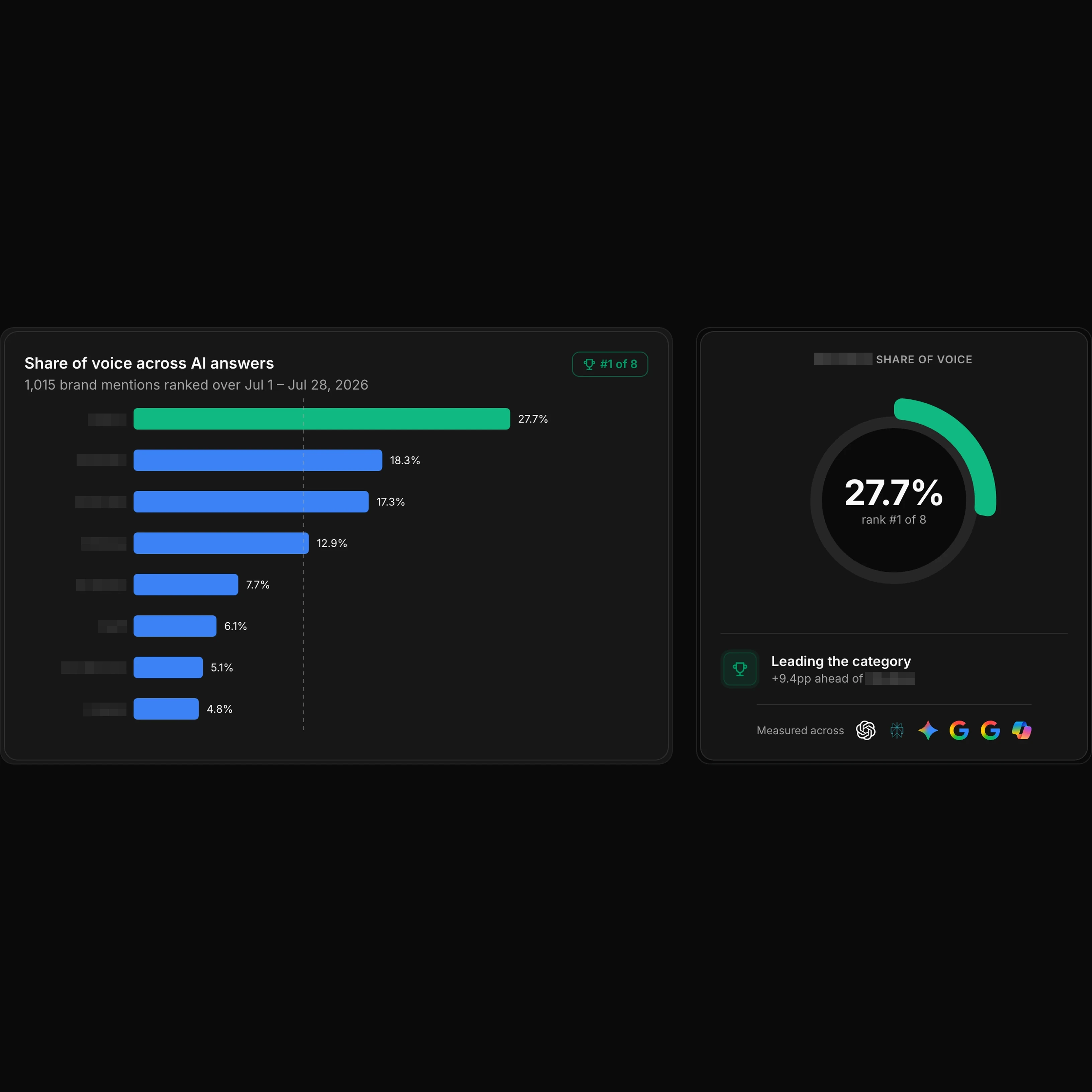
GEO for Agencies: How to Offer AI Visibility Monitoring as a Service
How SEO, PR, and brand agencies can package AI visibility monitoring as a retainer: a re-runnable evidence report where every mention and citation opens to the exact AI answer it came from.
Gan Liu
The GEO Audit Checklist for Agencies in 2026: From First Audit to Retainer
A repeatable GEO audit you can run across a whole client book - how to scope prompts with the client, run six engines, sort answers into quadrants, and turn the one-off audit into a monitored retainer with a report the client can check.
Gan Liu
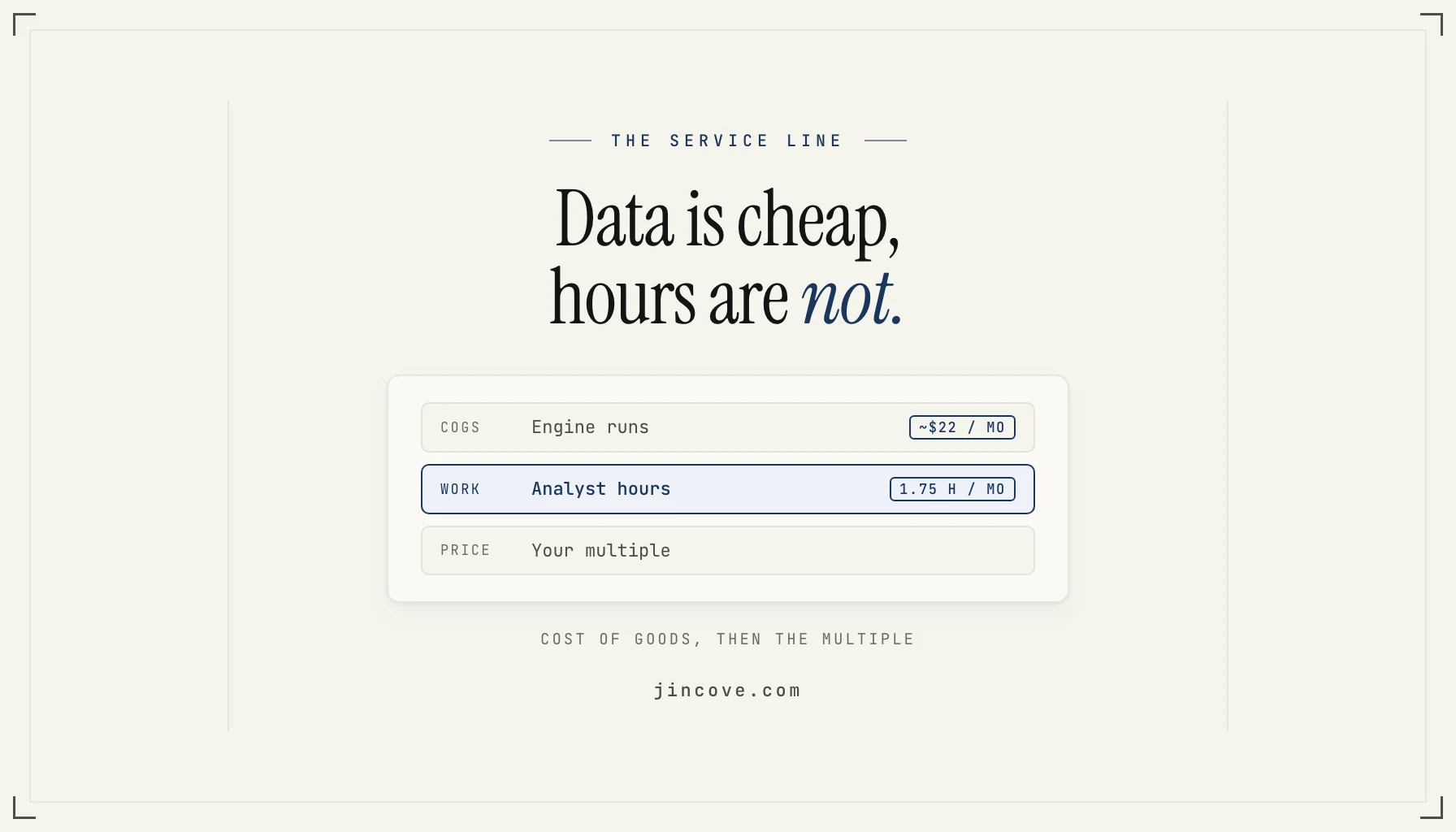
What to Charge for GEO Services: Pricing and Packaging for Agencies
How to price and package GEO as an agency service line - the two real cost lines, three packaging shapes with the arithmetic behind them, what the client actually receives, and the four situations where you should decline the engagement.
Gan Liu
Start with the free audit
Send us one brand. We’ll run it through the engines and send back the answers, citations, and sources — so the first report your client sees is already backed by evidence.
Free audit: ChatGPT, Perplexity and Gemini, run by hand. Paid work covers all six engines.